
Basic Korean Phrases for Travel: Backpacker & WHV-friendly
Some links in this post are affiliate links. This means if you purchase something through my links I may make a small commission at no extra charge to you. See my disclaimer.
South Korea is a modern nation at the forefront of many technology brands, and it is one that is easy to travel in. However, compared to many countries I have explored, in Asia or otherwise, it was surprisingly harder to communicate with locals than expected, which, in turn, made the experience slightly overwhelming.
Following my experience of living and working in South Korea for 12 months, I was able to compile a list of the most useful Korean phrases to improve your travel experience, including how and where to learn the basics.
It’s common in Korea for locals (especially the younger generation) to learn English in school, but most of them learn to read exceptionally well, without learning to really speak it. This has created a modest nation, full of people who can understand English, yet are often too shy to respond to tourists verbally. This creates a noticeable difference in the language barrier.
This is why I believe it is helpful for backpackers, short-term visitors and those on working holiday visas to take the time before arriving to memorise at least a few phrases to get by. The more the better, and the difference in your experience will be huge.
Check out our hub pages for your South Korea trip:
South Korea Working Holiday Visa Hub
Working Holiday Visa Hub
Gap Year Planning
| Country: | South Korea (Republic of Korea) |
| Currency: | South Korean Won / KRW / ₩ |
| Do you need a visa to visit as a tourist? | Check here |
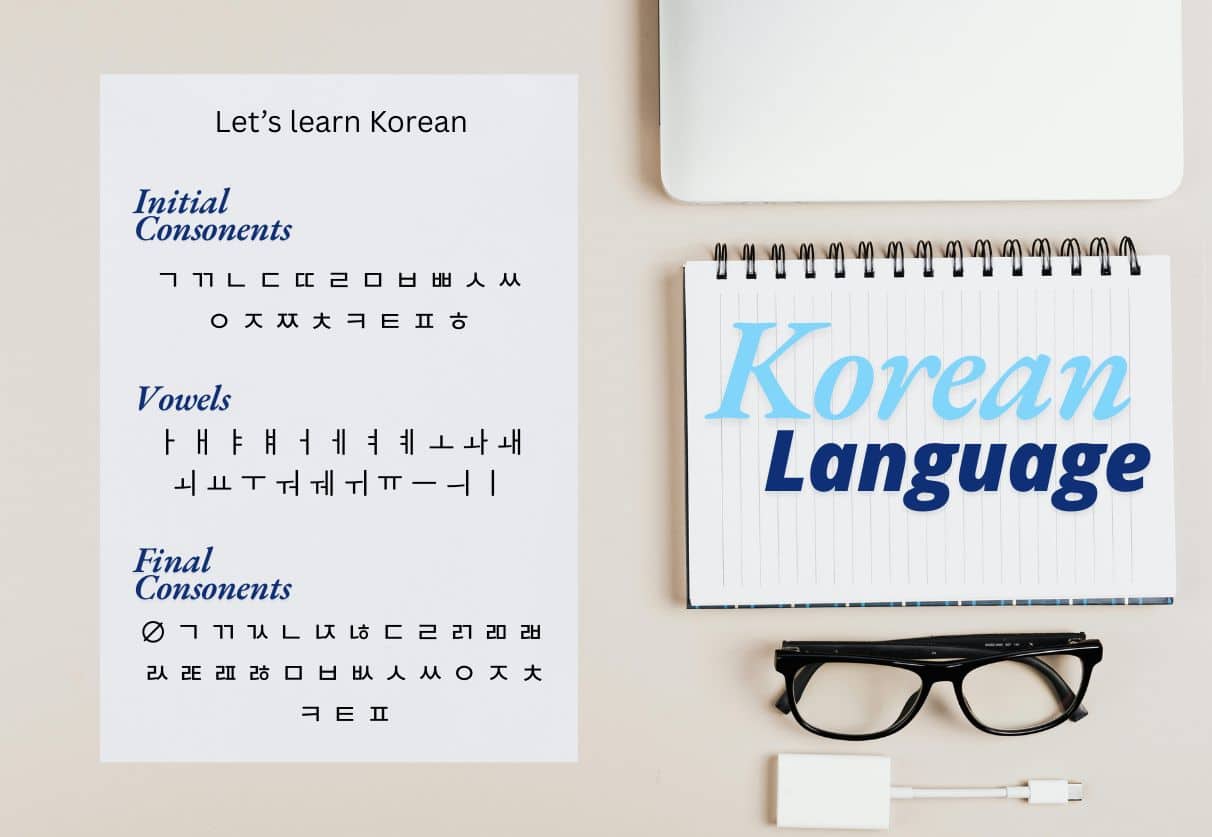
Using the Duolingo app, I learned the Korean alphabet (hangul) in 1 week, just 2 months before moving to Korea. I quickly found that I needed a real, native tutor to help me with my pronunciation and understanding responses in realistic daily situations.
For 2 months before and throughout the first 4 months of my visa, I maintained a consistent schedule with lessons once per week with a friendly native Korean tutor based in Daegu. She helped me gain the confidence to get by with simple conversations. I found her through Preply, a site that I still use today for other languages. With my links, you can get 30% off your first lesson with any tutor that you choose.
Considering a working holiday visa to Korea yourself? Check out how to apply, here
Authority and Hierarchy are Important in Korea
The culture in Korea is quite different to what we are used to in the West, as respect and hierarchy play a much bigger role than they do at home. This is reflected directly in the Korean language and changes how people interact.
Unlike English, the person that you are talking to can really change the way you speak. When speaking to someone older than you, a stranger, or someone in a position of authority (like bank tellers, shop workers, hostel staff, or tour guides, for example), it’s generally required that you speak more politely compared to speaking casually or with a close friend.
As a visitor, regardless of whether you are visiting Korea as a gap year traveller or on a one-week trip, you should always default to the most polite version of the language when using basic Korean phrases for travel and communication. This is much easier than trying to learn multiple variations of each phrase.
In most situations, adding “요 (yo)” to the end of a phrase or using universally polite words (like 주세요 (ju seh yo) when ordering) is enough to sound respectful, no matter who you are talking to.
Using language which is seen as too casual can often lead to misunderstandings and can give the impression of being abrupt and rude – even if unintentionally. On the other hand, no matter who you are talking to, speaking in a more formal tone will always be well received and is easily the safest option when speaking to Koreans.
Basic Korean Phrases For Travel Every Tourist Should Know
Basics & Greetings
- Hello – 안녕하세요 (annyeonghaseyo)
Pronunciation: an-nyong-ha-seh-yo
- Yes – 네 (ne)
Pronunciation: neh
- No – 아니요 (aniyo)
Pronunciation: ah-nee-yo
- Thank you – 감사합니다 (gamsahamnida)
Pronunciation: gam-sa-hab-nee-da
- Sorry / Excuse me – 죄송합니다 (joesonghamnida)
Pronunciation: joe-song-ham-nee-da
Ordering Food & Drinks
- I want this – 이거 주세요 (igeo juseyo)
Pronunciation: ee-geo joo-seh-yo
- Water please – 물 주세요 (mul juseyo)
Pronunciation: mool joo-seh-yo
- Delicious – 맛있어요 (masisseoyo)
Pronunciation: ma-shi-sseo-yo
- Not spicy – 안 매워요 (an maewoyo)
Pronunciation: an meh-wo-yo
Korean food is known for being very spicy, so this phrase is especially useful for those travellers who struggle to eat very spicy food.
- The bill please – 계산서 주세요 (gyesanseo juseyo)
Pronunciation: gye-san-seo joo-seh-yo
- Please – 주세요 (juseyo)
- Pronunciation: joo-seh-yo
Pro tip: It is perfectly okay in Korea to point at something on the menu and simply say 주세요 (juseyo), which means “please”, “please may I have”, “please give me”. This is commonly used in casual restaurants and cafes, and is usually acceptable for travellers to do.
Transport & Travelling Around Korea
- Go to the airport – 공항 가 주세요 (gonghang ga juseyo)
Pronunciation: gong-hang ga joo-seh-yo
- Stop here – 여기서 내려 주세요 (yeogiseo naeryeo juseyo)
Pronunciation: yuh-gi-so neh-ryeo joo-seh-yo
- Where is the station? – 역 어디예요? (yeok eodi-yeyo?)
Pronunciation: yuhk oh-dee-yeh-yo
Money & Numbers in Korea
- How much? – 얼마예요? (eolmayeyo)
Pronunciation: ol-ma-yeh-yo
- Too expensive – 너무 비싸요 (neomu bissayo)
Pronunciation: neh-moo bee-ssa-yo
- I don’t understand – 이해 못해요 (ihae mothaeyo)
Pronunciation: ee-heh mo-tae-yo
Unlike some other countries in Asia (such as Thailand, Cambodia and Vietnam, for example), the prices in South Korea are usually fixed, so bargaining and haggling are not common. So, it is not necessary to learn the phrases for asking for lower prices, as this is not something that typically happens.
Social Life & Getting to Know People
- Can you speak English? – 영어 할 수 있어요? (yeongeo hal su isseoyo?)
Pronunciation: yon-geo hal soo is-suh-yo
- Nice to meet you – 만나서 반가워요 (mannaseo bangawoyo)
Pronunciation: man-na-seo ban-ga-wo-yo
- Where are you from? – 어디에서 왔어요? (eodieseo wasseoyo?)
Pronunciation: oh-dee-eh-seo wa-sseo-yo
It’s worth noting that although Korean people are kind and friendly, they are often much more reserved when it comes to speaking to foreigners in comparison to other countries in the region. Short and respectful interactions with locals are the most common.
Do Tourists Need Formal Korean Phrases
Truthfully, no. But it is highly recommended to use the polite and more formal variation of speech compared to casual phrases.
Remembering how to keep sentences polite will go a long way in Korea, and to avoid confusion, I have made sure to only include the polite variant of each sentence above.
Common Mistakes Travellers Make When Trying To Use Korean Phrases For Travel
Using Casual Speech Instead of Polite Variations
Since respect and hierarchy are so important in Korea, one of the biggest mistakes travellers make when visiting is using language deemed too casual, without realising it.
In Korean, the way you speak changes depending on the person you are talking to. Using informal speech with strangers can come across as rude, disrespectful and can give the wrong impression, even if you don’t mean it that way.
Top tip: As a general rule, always default to the polite version of things to say. End sentences with 요 (yo)”, when speaking Korean as a traveller.
Forgetting to say “요 (yo)” at the end of your sentences
Even if you learned the right phrase and use the correct pronunciation, forgetting to add “요 (yo)” can make you sound too direct.
For example, saying a phrase without it comes across as rude and may make locals hesitant to respond to you. The sentences will still be understood without the ending, but they won’t sound as kind or natural. Adding “요 (yo)” will almost instantly make you sound more polite.
Expecting English to Work Everywhere
I’m going to be completely honest with you, English alone will not get you very far in Korea. If you stay within the bounds of Seoul, then you have the best chance at utilising English and minimal Korean. If you plan on visiting any other part of the country, Korean will make a significant difference.
I lived in Busan (the 2nd largest city in the country, located on the southern coast), and even though it’s known as the 2nd capital, many people I came in contact with could not communicate well with me in English. This surprised me, considering the size and population of the city.
Any time you’re outside a tourist zone, you will likely need at least some Korean to communicate more easily. Having a few of the above phrases will make everyday situations less stressful.
You can use specific apps to help you travel around Korea, including those for transport and translation, but they only go so far. You can still benefit more from knowing a few basic phrases in Korean that will take you further.
Panicking About Pronunciation
Korean pronunciation can feel intimidating to beginners, so many travellers avoid speaking altogether because they’re worried about getting it wrong or making mistakes.
In reality, most locals will understand you as long as you make the effort to try, even if your pronunciation isn’t perfect. It’s usually better to try rather than just stay completely silent.
Only Memorising Phrases Without Understanding Responses
Learning a handful of set phrases will help initially as a great starting point. But it can only get you so far with communicating with locals.
A common situation is being able to ask a question (like “how much is this?”), But then, not understanding the answer when it comes back in Korean. This is where more practice can often make a big difference, especially for longer trips or working holiday visas.
Since being able to understand responses is 50% of the struggle, I highly recommend considering a few language lessons before you head to Korea. You can choose a tutor who can work with you one-on-one and give you tips on pronunciation and responses for real-life situations you might find yourself in.
One way you can do this is through Preply. It’s a platform I have used for a few years myself before multiple trips (and long-term while learning Japanese, living in Okinawa for 3 years). With my Preply link, you can get 30% off your first lesson!
Why Learning Korean Is Worth It for Backpackers
For most travellers planning to visit South Korea, learning a few basic Korean phrases to help with travel is just enough to get you by, but if, like me, you want to visit for more than just a week or two, then going a step further can make a huge difference to your time in the country.
In Korea, everyday situations like ordering food, asking for directions, making purchases or navigating transport become easier when you can understand the basics. This is especially true outside of tourist hubs like Seoul, where English is less widely spoken.
Outside of logistics, there’s also a social aspect to learning Korean. Even a small effort can go a long way when speaking Korean, which can make interactions feel more natural and less restrictive. It becomes easier to make connections and build relationships during your time in the country.
Korea was a country I found hard to handle banking, mobile phone issues and paperwork relating to immigration and my resident card, without Korean. The more you know, the better in almost every way.
Need help planning your trip?
Check out how to plan a trip abroad & see my travel resources for more.
Skyscanner – A comprehensive comparison website showing where to purchase flights.
HostelWorld – The biggest selection of hostels & sociable accommodations.
Booking.com – The largest collection of accommodations AND flights worldwide.
Safety Wing – A travel insurance brand for long-term travellers and nomads.
Airalo – An eSIM card company that lets you stay connected during your trip.
Wise – Perfect for transferring foreign currencies.
iVisa – For applying for tourist and visitor visas.
Viator – Great for finding tours and activities worldwide.
Get Your Guide – Another company for finding activities.
Klook – Have some of the best activity deals in Asia.