


Why Road Trips Belong on Your Gap Year Bucket List
Some links in this post are affiliate links. This means if you purchase something through my links I may make a small commission at no extra charge to you. See my disclaimer.
Planning a gap year sounds exciting until you realise just how many places you want to visit. You might have a dream destination in mind, but figuring out what to do once you arrive can leave you overwhelmed by possibilities. It’s tempting to follow the same tourist routes as everyone else, especially when you’re visiting a country for the first time.
That’s exactly why road trips belong on your gap year bucket list. Instead of organising your entire adventure around fixed destinations, you can enjoy the journey between them. Whether you’re travelling with friends or setting off independently, a road trip gives you a different way to experience life abroad.
Check Out Our Gap Year Planning Hub Pages for Your Upcoming Trip:
Gap Year Planning Hub
Popular Backpacking Routes
Working Holiday Visa Hub
— Canada — Japan — New Zealand — South Korea —
Travel Beyond the Tourist Trail
Popular destinations attract visitors for good reasons, but they don’t always represent everything a country has to offer. When you depend entirely on organised tours, you might miss interesting places that sit outside the usual itinerary. Travelling by road gives you more opportunities to visit smaller communities and experience everyday life away from major attractions.
Imagine driving through the New Zealand countryside and stopping at a quiet coastal town that wasn’t part of your original plan. You might spend the afternoon at a local café and find yourself chatting with someone who recommends a nearby walking trail. These ordinary encounters can become some of your favourite travel memories.
Find Places Worth Remembering
You don’t need to abandon popular attractions to enjoy a more personal adventure. Instead, give yourself enough time between major destinations to investigate places that catch your attention. Check local information boards when you stop for fuel or visit a visitor centre. You might find a scenic viewpoint or an interesting community event that never appeared in your initial research.
Make Your Budget Go Further
Gap year travellers often need to stretch their savings across several months, rather than weeks. It takes a lot more organisation, Transportation can take a considerable portion of that budget, particularly when you’re moving between destinations frequently.
A road trip can offer better control over certain expenses, although renting a vehicle isn’t automatically cheaper than public transportation. You’ll need to account for fuel and insurance, along with any accommodation costs. Sharing those expenses with other travellers may make driving more affordable.

Choose Your Travel Style Carefully
Think about the type of journey you want before committing to a vehicle. A campervan might suit an extended adventure where you plan to stay at campsites, while a smaller rental car could work better if you prefer hostels. Compare the total cost of each arrangement rather than focusing on the daily rental rate. Also, check whether your rental agreement allows you to travel across every region on your intended route.
If you need to rent a car, there are a few places I can recommend that I have used myself in multiple countries. These two places are:
- Klook Rentals (This brand is best if you are renting in Asia, but I have used them in Canada too).
- Get Rent A Car (This replaced a previous company I had used for years that recently closed down and are no longer trading.
Experience More of the Outdoors
If you enjoy spending time outside, a road trip can bring you closer to the landscapes that attracted you to your destination. Rather than returning to the same accommodation every evening, you can arrange overnight stays near the places you want to experience.
Camping can make this approach particularly rewarding. You might wake up near a national park and head out for an early walk without spending hours travelling from a distant city. In some countries and regions you can participate in “free camping” which allows you to camp anywhere, legally, as long as you clean up after yourself and follow the “leave no trace” rule. Other places require you to have an official booking somewhere.
Of course, outdoor accommodation requires some preparation. Insects can become a nuisance when you’re camping near vegetation or water, especially during warmer weather. Choosing suitable insect protection for outdoor adventures can help you enjoy fresh air around your sleeping area without constantly dealing with unwanted visitors.
Build Confidence Through New Experiences
Travelling independently often means making decisions without the familiar support of home. On a road trip, you’ll encounter situations that require you to think for yourself and adapt when your original plans don’t work.
Perhaps you’ll arrive at a campsite and find that it has no available spaces. You’ll need to identify another suitable location rather than relying on someone else to solve the problem. These experiences can teach you to approach unfamiliar situations more calmly. You’ll gradually become more comfortable making decisions in places where you don’t know anyone.
Know When To Ask for Help
Independence doesn’t mean handling every challenge alone. Sometimes, asking a local resident for directions or speaking with campsite staff can save you considerable frustration. Keep emergency contact information accessible and make sure you understand local driving requirements. You’ll enjoy greater independence when you know where to turn if something goes wrong.
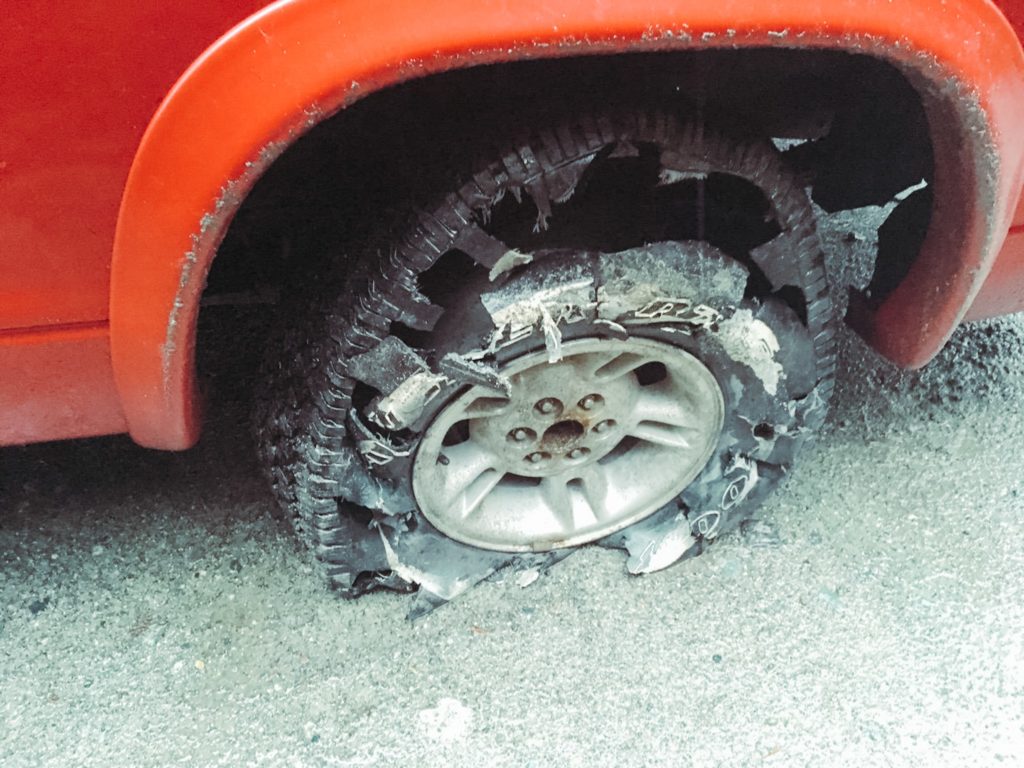
Above is a picture of my burst tyre on a road trip to Vancouver Island. We got rained on after our tyre AND our spare both became flat. Unfortunately for us, we were miles from any help so we didn’t have the luxury of asking for help.
Now, if you’ve experienced anything like this before, you’ll want to make sure that everything on future trips is organised and in the correct order. For me, that means I never rent a car without car insurance (sometimes a credit card plan has coverage, but sometimes it’s better to get extra insurance through the rental company). I have never crashed a car, but I had a few near misses in Vietnam and Taiwan which would have been very dangerous had they actually happened. Thankfully, I like to insure everything (rental cars, myself and my belongings) on every trip.
Don’t forget to get travel insurance to cover you if something bad happens. One company I have personal experience with is Safety Wing. Not everyone needs the same coverage, so make sure you get a personalised quote that suits you and your trip plans.
Meet People Along the Way
One of the most rewarding parts of travelling abroad is meeting people whose lives look completely different from yours. Road trips create opportunities for conversations that might never happen during a tightly scheduled vacation. The beauty of getting landmark and attractions recommendations from new friends and other travellers can
You could spend an evening at a shared campsite and end up talking with travellers heading in the opposite direction. Their experiences might introduce you to a destination you hadn’t considered. If you’re travelling alone, you can still enjoy the social side of road trips. Staying at hostels between driving days gives you opportunities to meet other backpackers without committing to travelling together.
Create a Journey That Suits You
There’s no single right way to spend a gap year. Some travellers want to cover as much ground as possible, while others prefer spending longer periods getting to know individual destinations. When planning your road trip, consider what you genuinely enjoy rather than copying someone else’s itinerary. You might love hiking but have little interest in crowded tourist attractions. Your route should reflect those preferences.
Here’s a simple way to approach planning:
- Choose a general route: Identify the region you want to travel through
- Set a realistic budget: Account for everyday expenses and unexpected costs
- Research overnight options: Check where you can legally park or camp
- Allow extra travel time: Avoid scheduling long driving days back-to-back
- Keep alternative plans: Prepare for changes in weather or road conditions
You don’t have to organise an entire year on the road to understand why road trips deserve a place on your gap year bucket list. A shorter journey can be just as rewarding, particularly if you’re trying independent travel for the first time.
Choose a destination you’ve always wanted to visit and stick to a manageable driving route nearby. Give yourself a few days to experience the journey without rushing toward the finish line. You might find that your favourite part of the adventure wasn’t somewhere you originally planned to go.
Resources to Help You Plan Your Trip
Check out how to plan a trip abroad & see my travel resources for more.
Skyscanner – A comprehensive comparison website showing where to purchase flights.
HostelWorld – The biggest selection of hostels & sociable accommodations.
Booking.com – The largest collection of accommodations AND flights worldwide.
Safety Wing – A travel insurance brand for long-term travellers and nomads.
Airalo – An eSIM card company that lets you stay connected during your trip.
Wise – Perfect for transferring foreign currencies.
iVisa – For applying for tourist and visitor visas.
Viator – Great for finding tours and activities worldwide.
GetYourGuide – Another company for finding activities.
Klook – Has some of the best activity deals in Asia.