

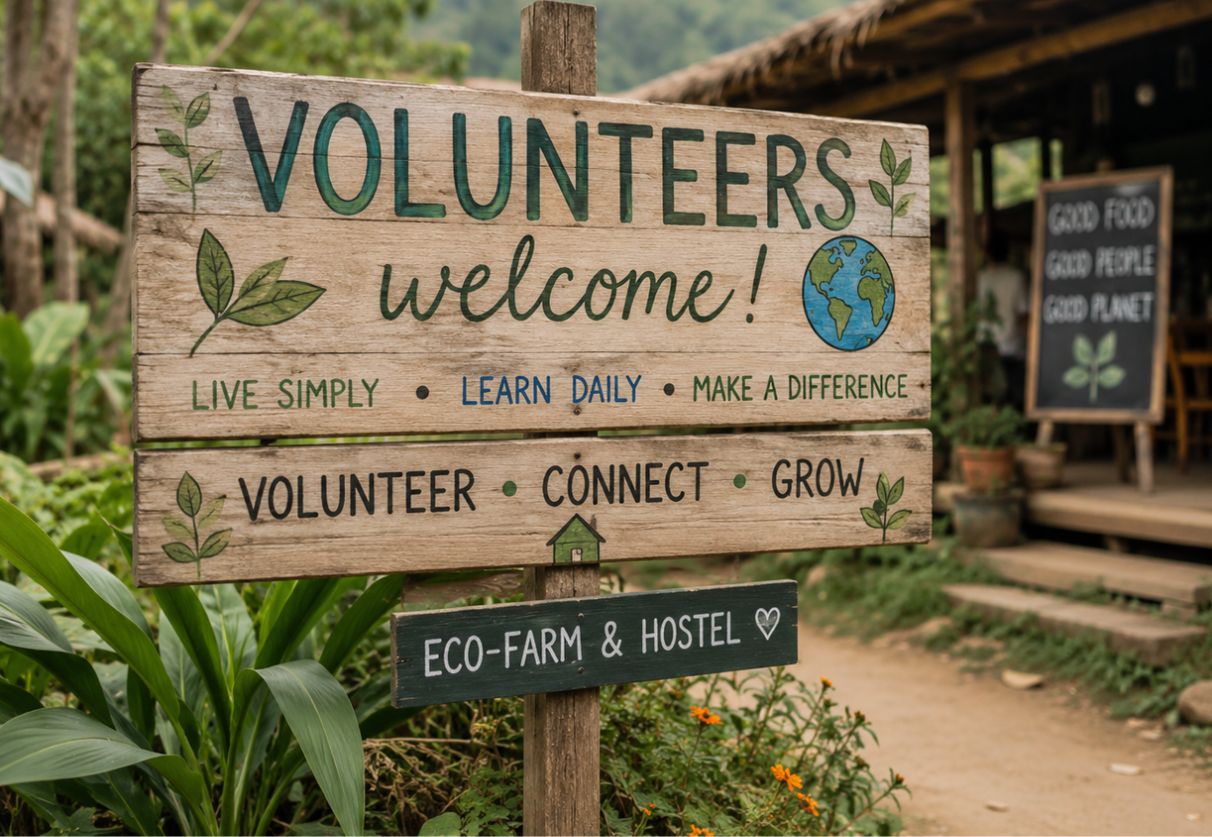
Volunteering Abroad on a Gap Year: A Full Guide
Some links in this post are affiliate links. This means if you purchase something through my links I may make a small commission at no extra charge to you. See my disclaimer.
So you’ve recently heard about volunteering or participating in a work exchange abroad, but you’re not sure what exactly those two things mean or how to volunteer in another country. Well, that’s exactly what I am here to help you understand.
Volunteering overseas is when you offer your time during your gap year to meet and help others.
But that sounds really broad, doesn’t it?
In what way could you be useful? How could you work abroad while also helping others? There really is no concrete answer, as there are multiple ways to participate in voluntary work around the world. It’s a popular way to add an extra layer of purpose to a trip, and the experiences can come in many flavours. It can allow you to meet people from all different walks of life, offer an extra pair of hands while getting something in return: a unique experience that takes you away from the typical 5-point tourist adventure at the most popular tourist sites.
Yes, the Eiffel Tower is worth seeing at least once. Yes, the Statue of Liberty is a famous landmark for a reason. But if you’re like me, then when you travel, you’re more likely to want to see those hotspots AND also meet the everyday locals in a country who live a completely different way of life from me. I don’t necessarily want my experience in Thailand to be the same as every other tourist. I want to see how I can help people while also allowing myself a unique opportunity to meet people I’d otherwise never meet if it wasn’t for the volunteering opportunities.
Over the years, this method of becoming a volunteer while travelling long-term through multiple destinations around the world has become much more popular, and I genuinely believe it’s because people want “more”. They want to visit the lesser-known places, and I get it.
So, the next step is to see if volunteering on your overseas gap year is right for you.
Check Out Our Gap Year Planning Hub Pages for Your Upcoming Trip:
Gap Year Planning Hub
Popular Backpacking Routes
Working Holiday Visa Hub
— Canada — Japan — New Zealand — South Korea —
What is volunteering abroad?
Volunteering abroad simply means giving your time and effort to help a project or organisation in another country without receiving a normal salary.
Depending on the type of opportunity, you might help with things like conservation, education, community projects, farming or charity work. Some placements provide accommodation or meals to all of their volunteers, while others expect you to cover your own expenses.
Many travellers find the idea of volunteering abroad appealing as a way to meet locals away from typical tourist areas, while giving their trip a bit more purpose than simply “travelling”.
Volunteering abroad vs Work Exchange: What’s the Difference?
| Volunteering Abroad | Work Exchange | |
|---|---|---|
| Main purpose | The usual purpose is supporting a cause, organisation, community or project | Usually centred around exchanging your time for accommodation or other benefits |
| What you receive | May receive accommodation, meals or support, but not a guarantee | Usually includes accommodation and can sometimes include meals, activities or other perks |
| Payment | Mostly unpaid | Unpaid work exchanges offer non-cash benefits |
| Typical hosts | Charities, NGO’s, conservation projects, community organisations and non-profits | Hostels, farms, guesthouses, families, eco-projects and small businesses |
| Typical work | Conservation, community work, education, charity support or skills-based projects | Hostel help, farming, housekeeping, reception, gardening, social media or general assistance |
| Cost to join | Some programmes are free, while organised volunteer placements may charge fees to house and feed you during your stay | Usually low-cost, although you may pay a membership fee to use a work-exchange platform |
| Main benefit to the traveller | Contribution, experience, cultural immersion and involvement in a project | Lower travel costs, slower travel, cultural exchange and accommodation savings |
| How structured is it? | Can range from informal volunteering to highly organised programmes | Usually arranged directly with a host around agreed hours and responsibilities before arrival |
| Length | Anything from a few days to several months or longer | Commonly a few weeks to a few months |
| Important consideration | Check that the project is ethical and that volunteers are genuinely needed | Check the workload, accommodation, host reviews and exactly what you receive in return |
| Visa rules | Unpaid volunteering can still be restricted under immigration rules – country dependent | Work exchanges may legally count as work because you receive accommodation or other benefits |
In reality, there is a lot of overlap as both volunteering abroad and work exchanges (whether for short or long-term) include offering free labour without cash payment. But that’s not to say they’re the same. The biggest difference is the purpose of the arrangement and why you want to participate.
Traditional volunteering is often about contributing to a specific cause, whereas a work exchange is more of a trade between travellers and hosts where you provide an agreed amount of help in return for accommodation, food or another benefit.
That’s not to say the rule is always the same. You may come across a conservation project that provides free accommodation for volunteers, while an eco-farm work exchange may have a genuine environmental or community purpose.
What other benefits could be given to travellers, you might ask?
Well, in Tromso, Norway, when I volunteered with a local family to help care for their 15 sledge dogs, during our free time they also took me out to find the northern lights as a free activity. They did this simply to give me an amazing experience during my stay, rather than it being part of our agreement.
What is a Work Exchange?
Although the table above gives a general outline, I want to go a little further into what a work exchange is really like. Often you’ll pay a small membership fee to join platforms like:
- WorkAway
- Worldpackers
- WWOOF
After registering, you’ll have access to a huge list of hosts in destinations around the world. When you find some you like, you can message them safely through the platforms to (hopefully) arrange a work exchange as part of your upcoming trip.
As your hours of work and labour expectations, along with accommodation and food as “payment”, are agreed in advance, you’ll start work within 1 day of arriving. Work exchanges are a fantastic way of gaining experience overseas, with locals and sometimes other travellers being part of the experience too. One hugely popular perk of this arrangement is that, by receiving accommodation in exchange for your time, it can significantly cut down costs while you’re helping and learning about your host destination.
What Do You Normally Get in Return?
“Free” accommodation is the biggest return on time investment of a work exchange, but it doesn’t always stop there. Many hosts will also include some or all of your meals, free wifi (when in regions where it is easily accessible) to stay connected with your loved ones at home. Plus, some hosts love to meet travellers and want to give them memorable experiences such as discounted or free activities in the local area, along with travel tips for after your placement has ended.
During another volunteer work exchange in South Korea, my host at the language cafe took the other travellers and me out to a traditional temple in Busan to enjoy Korea’s biggest holiday and see the beautiful traditional hanbok on locals.
What Types of Voluntary Work Can You Do Around the World?
Community Volunteering
Community volunteering usually involves supporting local organisations, charities or ethical projects. On these placements, you may be required to help at community centres, support youth activities, assist with events, raise money for and help specific organisations that may have limited resources.
These opportunities can be a good fit if you want your gap year to involve more local interaction rather than simply travelling aimlessly through a destination. However, it is important to research the organisations carefully to make sure volunteers are supporting existing local work rather than replacing paid job opportunities.
Environmental and Conservation Volunteering
This type of volunteering usually involves helping to protect the environment. These placements can include wildlife conservation, habitat restoration, reforestation, beach clean-ups, sustainability projects and conservation projects. Many of these projects focus on long-term volunteering abroad, but there are some shorter programmes available. The level of physical work among environmental volunteer projects varies greatly, so it’s worth checking ahead of time what is expected of you before applying.
Wildlife projects are one type where you should use extra caution. Looking for ethical projects is key, and truly ethical programmes should prioritise animal welfare and conservation goals rather than giving volunteers unnecessary hands-on contact with wild animals. I understand it may be fun, but in some cases it really isn’t in the animals’ best interest.
Teaching and Education Volunteering
Teaching and education-related volunteer programmes can range from casual language exchanges and conversation practice to helping with after-school tutoring or supporting qualified teachers.
These opportunities can often be rewarding for those who enjoy working closely with people and want to be more involved with locals of your chosen destinations. However, volunteers should not be placed into roles that require professional teaching, curriculum planning, childcare or specialist qualifications they do not have.
If you happen to be volunteering with children or vulnerable people, look for organisations with clear safeguarding procedures and appropriate background checks. It’s better to be safe and protect yourself and those you may be working close with.
Farm and Agricultural Volunteering
Farm volunteering and agricultural work exchanges are common among long-term travellers and, in quite a few destinations, working holiday makers. Opportunities in this category include organic farms, homesteads, vineyards, eco-farms, permaculture projects and rural properties.
Tasks may involve planting, harvesting, gardening, caring for animals (different from animal conservation), maintenance or general farm work. Many of these placements operate as work exchanges, where you contribute a set number of hours a day or week, in exchange for a “free” place to stay and sometimes meals. These work exchanges are especially popular among travellers who want to travel slowly, have a rural experience away from tourist hotspots, and reduce accommodation costs.
This type of voluntary work can be found around the world and is popular in Australia, New Zealand, Japan and across Central America.
Hostel and Hospitality Work Exchanges
This is one of the most popular ways that travellers and backpackers combine travel with volunteer-style work. In return for accommodation, travellers may be required to help at reception with guest bookings, housekeeping, planning social events, food preparation and bartending, and organising guest activities.
These placements are usually closer to work exchanges rather than traditional volunteering, because you are providing labour to a business in exchange for something of value, in this case a place to sleep. This volunteer style can be great for those who want to stay in one place for a number of weeks instead of constantly moving, and especially those who prefer a more sociable environment.
Skills-based Volunteering
Skills-based volunteering is exactly what it sounds like. It allows you to contribute your existing experience or knowledge instead of performing general volunteer tasks. Organisations may need help with areas such as:
- Photography
- Writing
- Website design
- Marketing
- Social media
- translation
- administration
- Graphic design
- Fundraising
This can be particularly useful for travellers who already have professional or creative skills and want to use them during their gap year. It’s a great way to stay up to date with skills, as many travellers worry they may lose them if they don’t practice for long periods. It can also offer a more meaningful experience than taking on a role that could easily be performed by a local paid worker.
How Much Does Volunteering Abroad Cost?
Although it may not be what you want to hear, it can be hard to pinpoint exact estimates for the cost of volunteer programmes because there are so many variables. Depending on the type of opportunity you choose, the costs can range from completely free to a few thousand pounds or dollars.
The biggest differences come down to where you go, whether you arrange your own placements or have a company plan it on your behalf, and whether you join a work exchange or a structured programme.
Completely Free Volunteering
Some volunteer opportunities do not charge volunteers anything to take part. These are usually arranged directly with:
- Charities
- Community organisations
- Local projects
- NGOs
- Environmental groups
However, please be aware that “free volunteering” doesn’t necessarily mean that everything will be free, because you may still need to pay for:
- Flights
- Local transport
- Accommodation
- Food
- Visas
- Travel Insurance
- Vaccinations
- Personal Expenses
In some cases, accommodation or meals may be provided, but this varies by organisation and project. A free placement can therefore be one of the cheapest ways to volunteer abroad, particularly if you are travelling in the destination.
Work Exchanges where Accommodation or food is included
Work exchanges, although they can be similar to free volunteer projects, are different because you usually provide an agreed amount of work or help in return for something of value. Most commonly, this is:
- Free accommodation
- Meals
- Laundry
- Activities
- Language Lessons
- Use of facilities
For example, you might help at a hostel for 4 hours each day in exchange for a dorm bed, or work on a farm in exchange for accommodation and meals.
You may still have some costs to consider, such as:
- Membership fees for work-exchange platforms
- Transport to the volunteer location
- Food that is not included
- Insurance
- Visa costs
- Spending money
For long-term travellers on a gap year or working holiday, the biggest benefit is the lower accommodation costs, considering accommodation is usually the biggest expense during a trip and even more so for a long-term trip.
Paid Volunteer Programmes
Some organisations charge a participation or programme fee to join.
These programmes can range from low-cost and affordable short placements to organised trips costing thousands.
The fee may include things such as:
- Accommodation
- Meals
- Airport transfers
- Orientation
- Local staff support
- Training
- Organised activities
- Transport to the project
- Administration
- Contributions towards the project itself
A higher price does not automatically mean a programme is better or more ethical, so it is very important to understand exactly what the fee covers before applying or paying.
You should also check whether additional expenses such as flights, insurance, visas and vaccinations are included.
Why Do Some Volunteer Programmes Charge Money?
Running a volunteer programme still costs money, even when the volunteers themselves are unpaid. An organisation may need to cover:
- Paid staff salaries
- Volunteer accommodation
- Food
- Training
- Equipment
- Project materials
- Transportation
- Administration
- Insurance
- Local partnerships
Some organisations will ask volunteers to pay as a way to put their money towards the upkeep of the volunteer (such as their accommodation and food), whereas others will put the money towards project resources. However, this is exactly where the travellers should ask questions. Before paying a large programme fee and committing, I always recommend finding out:
- Where the money goes
- What percentage supports the project
- What is included
- Whether local staff are being paid fairly
- Whether the organisation publishes information about its finances or impact.
You don’t necessarily need to avoid programmes that charge money, but you should definitely find out what exactly you’re paying for beforehand.
Can Volunteering Make a Gap Year Cheaper?
Absolutely, it can, in the right situations. Volunteering or work exchanges can sometimes make gap years cheaper, especially if accommodation or meals are included throughout.
Since accommodation is often the highest cost of long-term travel, spending a few weeks at a work exchange could reduce that expense by a lot.
For example, instead of paying for four weeks of hostel accommodation, you might stay with a host and contribute a few hours a day of your time while saving the 4 weeks’ money for activities instead. However, volunteering in general is not automatically a budget option!
A paid volunteer programme could actually cost more than travelling independently, so it’s worth researching and comparing based on your gap year goals and finances. I’d understand the choice more as:
Volunteering can lower the cost of a gap year, but the amount you spend or save depends heavily on the type of placement or project you choose.
Work exchanges tend to have the clearest potential for reducing everday spends and travel costs, while organised volunteer programmes are often chosen more for structure, support or a specific experience instead of saving money. I’ve made a small comparison table for you to look at while deciding which is best for you:
| Type | Typical Cost Expectation | Potential to Lower Travel Costs |
|---|---|---|
| Free volunteering | No project fee, but you usually cover the rest of your own expenses | Medium |
| Work exchange | Usually low or no cost. Accommodation and sometimes food included. | High |
| Paid programme | Programme fee plus possible travel expenses | Low |
Who is Volunteering or Work Exchange Best For?
Volunteering and work exchanges can suit a whole range of different gap year travellers, but they are particularly useful for people who want more than simply moving from place to place. They usually involve some level of commitment, a routine and responsibility, so it helps to be realistic about the expectations and what you actually want from your trip.
You Might Enjoy It If
- You want to travel more slowly and spend more time in one place to really get to know the area properly.
- You enjoy meeting people and being part of a community rather than travelling solo all the time.
- You want your gap year to have a small sense of purpose, whether supporting a project, learning new skills or helping others in some way.
- You’re comfortable having some structure or routine in your day, such as agreed working hours or responsibilities.
- You’d like to lower your travel costs, especially if accommodation or meals are included in exchange for your time.
- You’re open to the less glamorous parts of travel. Volunteering might involve cleaning, maintenance, gardening, repetitive tasks or physical labour.
- You want to immerse yourself in other cultures and are interested in experiencing everyday life somewhere new instead of only visiting tourist areas.
- You’d like to learn practical skills or use skills you already have in a new environment.
- You are flexible and adaptable to change. Hosts, accommodation and working conditions may be completely different from what you are used to.
- You want to combine different gap year styles. A work exchange can easily form just one part of a longer backpacking trip or working holiday.
It Might Not Suit You If
- You want complete freedom over your schedule and dislike having commitments while travelling.
- Your priority is seeing as many places as possible. Staying with a host for a few weeks can slow down a fast-paced itinerary.
- You need to earn money during your gap year. Most volunteering and work exchanges are unpaid. The only “payment” you may get is some accommodation or food.
- You are only considering it because you think it means free accommodation. You are still expected to contribute genuine time and effort on placements.
- You would resent doing routine or physical tasks in exchange for your stay.
- You prefer privacy and independence. Many placements involve shared accommodation, communal spaces, or living closely with hosts and other volunteers.
- You’re uncomfortable with uncertainty. The quality of placements can vary, especially with informal work exchanges.
- You don’t want to research organisations or hosts carefully. Checking reviews, expectations, visa rules and ethical considerations is an important part of choosing programmes.
- You’d prefer a “normal” job or formal career experience. A working holiday, internship or structured programme may be more suitable for you.
- You struggle to set boundaries. A good work exchange should have clear expectations before arrival about hours and duties, and you need to be willing to speak up if those expectations are not respected.
These two lists should be used as a guide to see which one you align with more. No, not every single person will tick every box above; however, if you align mostly with the second list, then volunteering might not be right for your gap year right now.
How Long Can You Volunteer Abroad?
Not every volunteer experience has to last only a few weeks. Some travellers spend several months or even a large part of their gap year working with the same community or organisation.
Longer placements can allow you to build stronger relationships with those you are volunteering with, understand the project and cause more deeply, and take on much more responsibility than a 2-week programme would. This can also offer more stability than having to move somewhere new, often, especially if food and accommodation are included.
However, the longer the commitment to a programme, the more important it is to check and fully understand the visa requirements, living arrangements, working expectations and whether the organisation is suitable for you.
Please note: Some countries do not allow volunteering on a tourist visa. So always check before booking anything so you can avoid getting into trouble with immigration.
How to Find Volunteering and Work Exchanges Abroad
There are multiple ways to find volunteering and work exchange opportunities abroad. The best option for you depends on whether you want a formal and structured programme, a more casual and flexible work exchange or something you arrange directly with an organisation.
Work Exchange Platforms
Work exchange platforms are websites or apps that connect eager travellers with hosts offering placements in hostels, on farms, at guesthouses, eco-projects and more. Hours of work and expectations are often agreed ahead of time in exchange for a place to stay and sometimes other benefits.
Three of the most well-known platforms are:
- Workaway
- Worldpackers
- WWoofing
If you’d like to learn more about Workaway, these guides can help you:
- Is Workaway Worth It During Your Gap Year?
- Alternatives to Workaway & Other Similar Sites For Work Exchanges
- Is Workaway Safe? Site Safety Features for Volunteering
Volunteer Organisations and programmes
If you want a more structured experience, you can apply directly through organisations that arrange volunteer placements. These may provide accommodation, meals, local support, training and organised activities, although they often charge a programme fee.
Platform directories comparing volunteer programmes:
- Go Overseas
Probably one of the most well-known brands, it is more of a comparison site that advertises many different types of volunteering projects for you to choose from. The website is easy to use, with the ability to filter by destination, experience type, duration and cost.
- Go Abroad
Another established directory where volunteer sites and programme providers are listed, offering reviews and a range of volunteer opportunities. Straightforward to use and is often one of the top recommended for volunteer seekers.
Programme providers:
- International Volunteer HQ (IVHQ)
Operating since 2007 and currently offers over 300 projects across 40+ countries, with programmes ranging from 1-4 weeks. They are one of the listed providers on both Go Overseas and GoAbroad.
- Projects Abroad
Another long-established company that offers structured programmes for travellers with considerable support and is perfect for those looking for a more organised placement instead of a casual work exchange. Go Overseas currently lists them as a reputable and highly rated provider. - Maximo Nivel
Another highly rated provider, except this one focuses on placements and experiences in Latin America instead of worldwide. Operating locally in Costa Rica, Guatemala and Peru and is a hit for gap year travellers along the “Gringo Trail” backpacking route.
Contacting Organisations Directly
You can also look for local charities, community projects, farms, conservation organisations or hostels and contact them directly. This can sometimes give you more flexibility and allow you to find opportunities that aren’t advertised on large platforms.
Remember: Being listed on a platform does not automatically guarantee a programme is ethical or suitable for you. Always do your research before committing or spending money, read recent reviews and understand exactly where your money would go.
How to Choose a Safe and Ethical Opportunity?
Volunteering abroad can be an incredible experience, but a good cause or impressive website does not automatically mean a programme is safe or ethical. Before committing your time or money, research both the organisation and the individual project you’ll be joining.
A good volunteer programme or work exchange should be TRANSPARENT about where you’ll be staying, what you’ll be doing, how many hours you’ll be working, and what support will be available for you if something goes wrong.
Before agreeing to a placement, check the following:
- Recent reviews from previous volunteers – Look beyond testimonials published on the organisation’s own website.
- Exactly what your role involves – You should know what will be expected of you before you arrive.
- Where your money goes – If you’re paying a programme fee, the organisation should be able to explain what it covers.
- Who benefits from your work – A responsible project should respond to genuine local needs rather than just creating experiences for tourists.
- Whether you’re qualified for the work – Be wary of organisations allowing unqualified volunteers to perform medical, teaching, construction or other specialist work.
- Safeguarding policies – Organisations working with children or vulnerable people should safeguard appropriately.
- Animal welfare standards – Wildlife volunteering should prioritise conservation and animal welfare rather than close encounters designed for tourists.
- Accommodation & working conditions – Know where you’ll sleep, what facilities you’ll have access to and your expected working days and hours.
- What support is available – Find out who you can contact if something goes wrong, if you feel unsafe or if the placement is not what was advertised.
- Visa requirements – Don’t assume that unpaid work is automatically permitted on a tourist visa. Check the rules for your destination yourself!
If you’re considering Workaway specifically for a work exchange-style experience, you can read my article asking: Is Workaway Safe? Site Safety Features for Volunteering for a closer look at that specific website’s safety features.
Volunteer Abroad Red Flags To Watch For
There are also some warning signs that you should be aware of, which, if you see them, should prompt you to be more cautious and research a LOT more. If it doesn’t seem transparent, it’s worth walking away and looking for a different experience.
- The role is deliberately vague. It is not clear about your responsibilities, hours or living arrangements.
- There are no independent reviews. A new project is not automatically unsafe, but a complete lack of verifiable information means you should be more cautious.
- You’re pressured to pay quickly. Be wary of all organisations using urgency pressure to stop you from researching your options.
- Nobody can explain where your fee goes. Paying to volunteer isn’t an automatic red flag, but a reputable organisation should be transparent about its fees.
- Unqualified volunteers are given inappropriate responsibilities. If you’re being allowed to perform work that would normally require professional qualifications at home, you should question why.
- Short-term volunteers are given unrestricted access to vulnerable people. In particular, be extremely cautious of orphanages or children interaction as a selling point.
- The project appears to replace paid local employment. Ask whether the work genuinely requires international volunteers or could provide paid work for locals.
- The host dismisses questions about visas. Statements such as “everyone just arrives as a tourist” are not a substitute for checking official immigration information.
- The workload is drastically different to advertised. Being pressured into significantly longer hours or responsibilities from those originally agreed is a legitimate reason to reconsider the placement.
Can You Volunteer While Travelling?
Start Planning Your Volunteer Gap Year
I get it. You’re sold on the idea of participating in voluntary work throughout your gap year so you can travel around the world with purpose and to create amazing memories.
BUT slow down for just one moment. There are a few very important questions you need to consider before diving in at the deep end.
Do You Need a Visa To Volunteer Abroad?
This answer is nuanced because it is technically both “yes” and “no”, depending on the overseas destinations you’re hoping to volunteer in during your gap year.
Some countries around the world will allow you to simply enter on a tourist visa and (provided you don’t overstay the length of that visa) let you volunteer, as long as no cash money is exchanged. This is the best-case scenario for those who are overwhelmed by visas and the administrative processes involved with getting them.
However, not every country follows this same rule. Some countries will require you to have an appropriate type of work permit to engage in this type of “work”. In many places, a work exchange is still thought of as work even when not receiving money, because you are receiving a payment of some kind: accommodation during your stay.
Now, I’m not going to make this a huge section on which countries allow volunteering on a tourist visa vs a work visa, but I will say this:
Please check the visa requirements for the countries you hope to visit before you book anything. It is not worth getting in trouble by working (volunteering is often classed as a type of work) when you are not allowed. It is not worth being deported over!
Do You Need Travel Insurance for Volunteering Abroad? Is it Different for Short or Long-term?
This is a completely different question, and it definitely needs to be taken seriously. If you have a travel insurance policy that does not include working or volunteering, and something happens where you get sick or injured, you could end up invalidating your insurance when you need it most.
What this means is: If your insurance doesn’t explicitly state that working or volunteering is included, you need to find out from the company directly if you are covered if something happens while doing voluntary work abroad. If they say no, then I would HIGHLY recommend finding a company that does, and if they do, then at least you can have some peace of mind that, should something go wrong (& hopefully it doesn’t), you can receive help when you need it.
Resources to Help You Plan Your Trip
Check out how to plan a trip abroad & see my travel resources for more.
Skyscanner – A comprehensive comparison website showing where to purchase flights.
HostelWorld – The biggest selection of hostels & sociable accommodations.
Booking.com – The largest collection of accommodations AND flights worldwide.
Safety Wing – A travel insurance brand for long-term travellers and nomads.
Airalo – An eSIM card company that lets you stay connected during your trip.
Wise – Perfect for transferring foreign currencies.
iVisa – For applying for tourist and visitor visas.
Viator – Great for finding tours and activities worldwide.
GetYourGuide – Another company for finding activities.
Klook – Has some of the best activity deals in Asia.